

Operation Secure Store (OSS) is a multifaceted initiative providing Federal Firearms Licensees (FFLs) with education on solutions and services that enhance operational security and aid in identifying potential risks, protecting interests and limiting the disruption of operations.
Central to the OSS initiative is the National Shooting Sports Foundation’s® (NSSF’s®) cooperative partnership with the Bureau of Alcohol, Tobacco, Firearms and Explosives (ATF) in working to deter and prevent thefts from FFLs, leveraging resources to enhance public safety and reducing the impact to communities affected by these crimes.
The OSS program focuses on five areas: “Education and Awareness,” “Assessment and Risk Analysis,” “Planning and Strategy,” “Engagement” and “Response.” This approach addresses many of the most common security concerns FFLs have, with a focus on providing a wide array of solutions that mitigate risk and protect these businesses.
Areas of Focus
Underpinning these five areas is the commitment to providing education and driving awareness to FFLs that ensures they have an ongoing awareness of potential threats, an understanding of security basics and access to the techniques and solutions that can be effective in protecting their businesses. Central to this is NSSF’s partnership with the ATF in developing educational programming, including our current and ongoing series of regional security seminars hosted by the ATF.
This topic supports the initial step in identifying the vulnerabilities and weaknesses that could cause an FFL to be more susceptible to a criminal threat or other hazard that could compromise daily operations. Security and risk assessments, a service provided by NSSF, seek to evaluate credible threats and capabilities, identify vulnerabilities, test current controls and assess consequences of a breach.
Upon the assessment’s completion, gaps in existing controls may be identified and remedies suggested to ensure those areas in need of improvement can be addressed. Additionally, through these assessments, FFLs are afforded the skills and knowledge to conduct ongoing self-assessments that include assessing the potential risks and prioritizing how and when those risks need to be addressed.
This details when, where and how an FFL will develop or modify its security processes and programs as supported by the knowledge gained through the “Assessment and Risk” material, always with the goal of mitigating risk and deterring potential threats. Strategies will include recommendations for evaluating relevant technologies and other security solutions, while also defining operational controls that can improve risk mitigation.
Community engagement is often overlooked as a component of crime prevention, but it is one that can have a tremendous impact on crime and crime prevention strategies. Active participation and relationship building with local law enforcement, the business community and the community citizens can be critical to protecting a business, and engaging all of these also helps build a beneficial level of trust between the FFL and the community. Both the NSSF and ATF have established protocols for providing outreach and support to FFLs and their communities.
Your ability to respond quickly and efficiently to a crime against your FFL business is critical to not only identifying the perpetrators of the crime and recovery of stolen goods, but to the speedy reestablishment of daily business operations. ATF and NSSF are both committed to providing timely support to FFLs when a criminal or other emergency event occurs.
Our Partners
Bureau of Alcohol, Tobacco, Firearms and Explosives
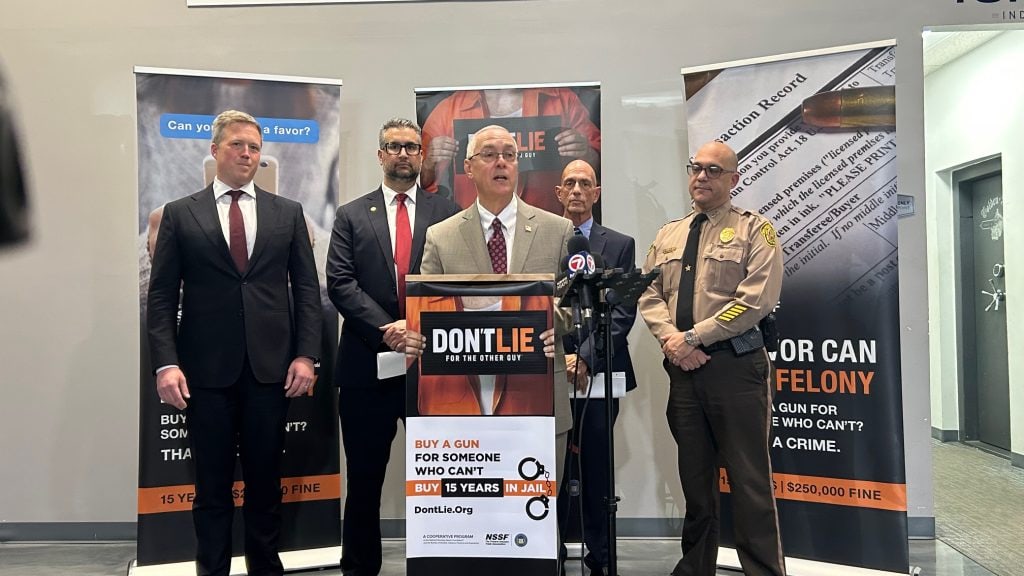
ATF and the firearm industry collaborate to keep firearm retail stores secure, prosecute individuals who burglarize firearm retailers, and to inform the public that it’s illegal to purchase a firearm for someone who cannot pass a background check.